






Real-Time GPS Tracking
How It Works and Why It’s Changing Everything
Imagine knowing exactly where your car, equipment, or delivery vehicle is — not hours later, but right now.
That’s the power of real-time GPS tracking, a technology that’s transforming how individuals and businesses monitor movement, protect assets, and improve efficiency across Australia.
From tracking a single car to managing hundreds of vehicles, live GPS tracking provides instant location updates, helping users make smarter, faster decisions. Here’s how it all works.
The Basics — What Is Real-Time GPS Tracking?
A real-time GPS tracker constantly collects and transmits location data.
It connects to GPS satellites orbiting Earth to pinpoint exact coordinates, then sends that data via 4G or 5G mobile networks to your device or dashboard — updating every few seconds.
This means you’re never looking at yesterday’s location or even last hour’s position — you’re seeing the exact live movement of your asset, second by second.
How Real-Time GPS Tracking Works Step by Step
1. Satellite Positioning
GPS satellites constantly broadcast time and location signals. The tracker’s receiver measures how long those signals take to arrive and uses that data to calculate its position on Earth — usually accurate to within 2–5 metres.
2. Data Transmission
Once the tracker determines its position, it sends the coordinates to a central server via mobile data (4G/5G) or satellite.
Each update typically includes:
- Latitude and longitude
- Speed and direction
- Time stamp
- Battery level or signal strength
3. Real-Time Display
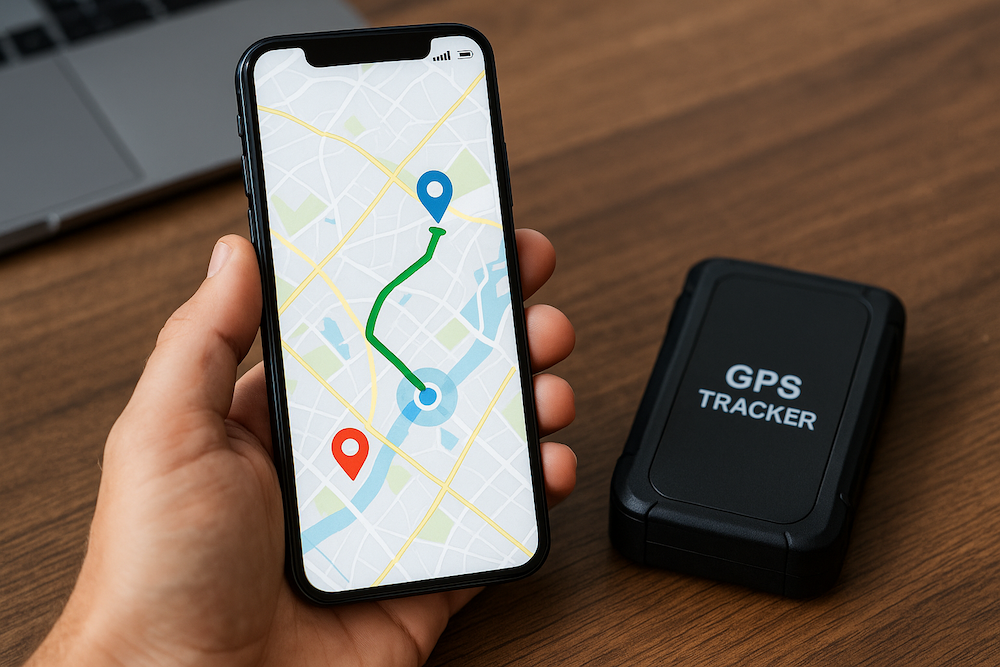
That live data is instantly shown in your tracking app or dashboard. You can view moving icons on a map, set alerts for movement, and even replay travel history over the past days or weeks.
Key Benefits of Real-Time GPS Tracking
1. Instant Alerts
If a vehicle or asset moves outside a preset area, you get notified immediately — allowing for fast theft response or route correction.
2. Route Optimisation
Businesses use real-time tracking to analyse driver routes and automatically select faster paths, saving fuel and improving delivery times.
3. Safety and Accountability
Tracking provides peace of mind for families, fleet managers, and business owners. Every journey is logged, reducing risk and promoting safer driving behaviour.
4. Transparency and Trust
For delivery services, trades, or logistics companies, being able to share live tracking links with customers builds trust and professionalism.
Real-Time vs. Passive Tracking — What’s the Difference?
- Real-Time Tracking: Updates every few seconds, allowing you to view live movement on a map. Ideal for vehicles, fleets, and security applications.
- Passive Tracking: Records data internally and uploads it later. Useful when mobile coverage is limited or for analysing trip history offline.
If you need instant updates and alerts, real-time tracking is the clear winner.
Real-Time Tracking in Action
Across Australia, this technology is already helping thousands of people every day:
- Logistics companies monitor deliveries live to guarantee on-time arrivals.
- Tradies protect valuable trailers and tools from theft overnight.
- Families track elderly relatives or young drivers to ensure safety.
- Farmers monitor equipment moving across large rural properties.
Whether for work or personal use, live GPS data helps everyone stay informed, connected, and in control.
What to Look For in a Real-Time GPS Tracker
When choosing your device, pay attention to:
- Update frequency: Faster refresh rates (every 5–10 seconds) offer true real-time visibility.
- Battery life: Some units balance rapid updates with smart power-saving modes.
- Coverage: Opt for trackers that use Australian 4G/5G networks or satellite for rural areas.
- User-friendly app: The best platforms are simple, intuitive, and accessible on any device.
- Durability: Look for IP-rated (water and dust resistant) devices for outdoor use.
The Future of Live Tracking
Real-time tracking continues to evolve with the rise of AI, IoT (Internet of Things), and automation.
Future trackers will offer predictive analytics, suggesting maintenance before breakdowns occur or forecasting delays based on traffic and weather data.
Soon, GPS tracking won’t just tell you where something is — it will tell you what’s about to happen next.
Frequently Asked Questions
Q: How accurate are real-time GPS trackers?
A: Most high-quality models are accurate within 2–5 metres, depending on satellite visibility.
Q: Do I need a SIM card or subscription?
A: Yes, most trackers use mobile networks to send live data. Subscription costs cover data usage and server access.
Q: Can I track multiple devices at once?
A: Absolutely. Modern dashboards allow users to monitor dozens — even hundreds — of trackers on one screen.
Final Thoughts — The Power of Knowing Now
In a world where timing is everything, real-time GPS tracking gives you more than just data — it gives you confidence, control, and security.
Whether you’re protecting assets, managing a fleet, or simply keeping loved ones safe, instant visibility means peace of mind 24/7.
CTA: Experience Live Tracking at AssetLocator.com.au
At AssetLocator.com.au, we help Australians access advanced real-time GPS tracking systems for vehicles, assets, and personal safety.
👉 Discover our latest tracking solutions and see how easy it is to bring your world into view — in real time.

Author